

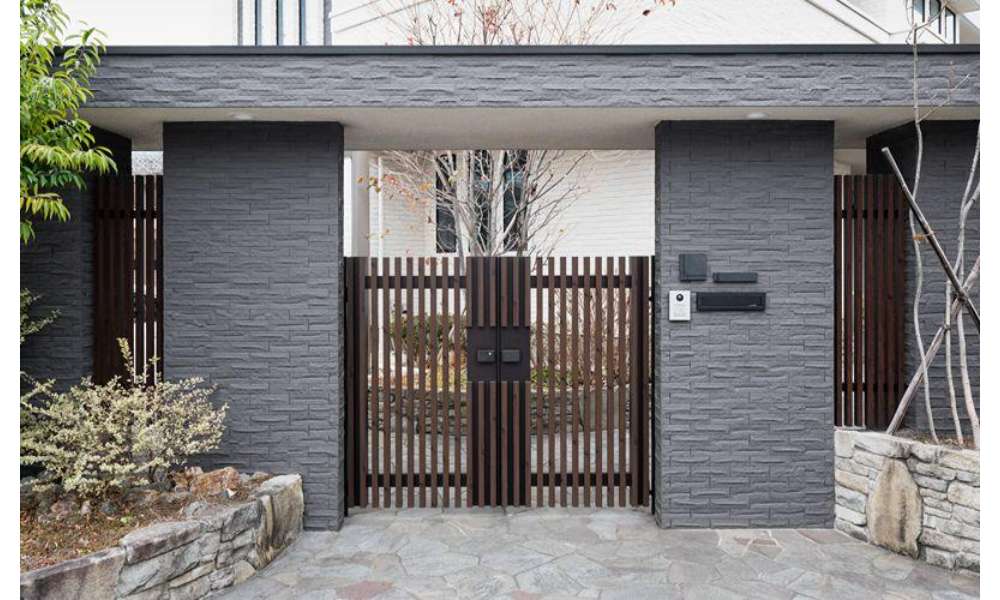
Security and convenience are paramount for any property owner. In the bustling urban landscape of Singapore, where landed properties often juggle tight spaces with high aesthetic standards, the driveway gate is more than an entry point; it is the first line of defence. Yet, despite the obvious utility, many homeowners hesitate to upgrade. They cling to outdated beliefs that automation is a troublesome luxury rather than a practical necessity.
If you have been sitting on the fence, deterred by hearsay or outdated information, it is time to set the record straight. Let us dismantle four prevalent misconceptions regarding the installation and maintenance of an autogate in Singapore.
Misconception 1: “Automation is Only for the Ultra-Wealthy”
There was a time when motorised gates were the exclusive domain of sprawling Good Class Bungalows. The technology was nascent, the motors were imported at a premium, and the installation required specialised electrical overhauls. This is simply no longer the case.
Today, the market has democratised significantly. Advances in manufacturing and the widespread availability of reliable motor systems have driven costs down. Whether you own a terraced house in Serangoon or a semi-detached house in Katong, there is likely a system that fits your budget.
View this purchase not as an expenditure, but as a capital improvement. A manual gate requires physical effort every time you enter or leave—a minor annoyance that becomes significant during a tropical downpour. Furthermore, a robust automated system increases the perceived value of the property. Prospective buyers view an automated entrance as a standard requirement for modern living, not an optional extra. The return on investment, both in daily convenience and asset value, far outweighs the initial installation cost.
Misconception 2: “They Break Down Constantly and Maintenance is a Nightmare”
This is perhaps the most persistent myth. It stems from the early days of automation when motors were ill-equipped to handle Singapore’s high humidity and torrential rain. Older systems often suffered from water ingress or circuit board corrosion.
Modern engineering has resolved these issues. Contemporary motors are housed in weather-resistant casings designed specifically for tropical climates. The gear mechanisms are often bathed in oil baths for cooling and lubrication, ensuring longevity even with heavy daily usage.
The fear of frequent automatic gate repairs is largely unfounded, provided you invest in quality hardware from the outset. Most “breakdowns” are actually minor alignment issues caused by ground shifting or debris on the track—problems easily rectified without a technician. While mechanical devices do require servicing, a standard autogate is a workhorse. It does not require constant pampering. A routine check every 12 to 18 months is usually sufficient to ensure the bearings are greased and the electronics remain dry.
Misconception 3: “All Autogates Require Massive Space for Installation”
Property owners with shorter driveways or limited frontage often assume they cannot accommodate an automated system. They visualise large swing gates that require a wide arc to open, eating into valuable parking space.
This is where the automatic sliding gate opener proves its worth. Unlike swing gates, which require depth, a sliding system operates laterally. It hugs the perimeter wall, requiring virtually no depth clearance. This is ideal for typical Singaporean landed homes where maximising the car porch area is essential. Even if your property lacks the side clearance for a single long gate, telescopic sliding systems (where multiple panels stack behind one another) offer a compact solution.
Do not assume your driveway geometry disqualifies you. The industry has evolved to offer trackless folding gates and arm systems that can articulate in tight corners. There is almost always a configuration that respects your spatial constraints while delivering the requisite security.
Misconception 4: “If the Power Cuts, You Are Trapped”
The fear of being locked in—or out—during a blackout is a valid concern, but one that manufacturers addressed years ago. It is a misconception that an automated gate becomes an immovable wall without electricity.
Almost all modern systems installed in Singapore come equipped with a manual override key. In the event of a power failure, a simple turn of a clutch key disengages the motor, allowing you to push the gate open by hand.
Furthermore, many DC motor systems now include backup batteries as a standard feature. Since the motor runs on low voltage, a small battery pack can facilitate several cycles of opening and closing even when the mains power is down. You maintain security and mobility regardless of the status of the electrical grid. It is a fail-safe technology designed with contingencies in mind.
The Reality of Modern Access
Stripping away these myths reveals the truth: automating your entrance is a pragmatic decision. It enhances security by ensuring gates are not left propped open out of laziness. It improves safety by allowing you to enter your property without stepping out of your vehicle late at night. It is a robust, mature technology that has adapted to the specific rigours of the Singaporean climate and housing market.
Do not let outdated fears dictate the functionality of your home. The technology is accessible, the mechanisms are durable, and the spatial solutions are versatile.
Take Control of Your Assets
A gate is just metal and motor until you give it intelligence. Stop settling for manual labour and outdated security.
A well-installed autogate should work quietly in the background, not demand constant attention. If you want an autogate system that suits your property, usage needs, and long-term expectations, contact San Automation Gate to discuss reliable autogate solutions built for everyday use.

