

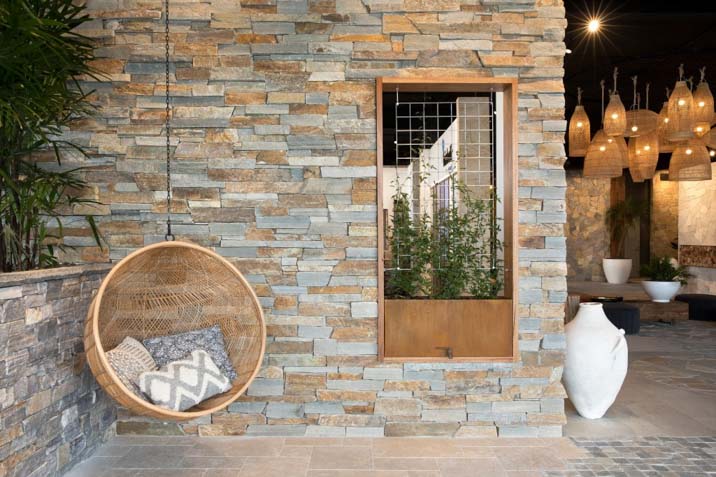
In construction, cladding, or decoration, natural stones such as Dijon flagstones for example provide warmth while giving the feeling of being closer to nature. These materials, resistant and easy to maintain, can be used on facades, stairs, outdoor areas, and on floors and walls.
Therefore, using natural stones in the construction and setting of the house is a great option for those who want to make their space elegant without losing simplicity, in addition to making a sustainable choice, as there are brands that offer quality and ecological products for this purpose.
But despite the practicality, natural stones still generate doubts when choosing which is ideal for each environment. For this, it is necessary to know what they are composed of and the attributes of the chosen stones. Today’s article will present the types of stones and their most suitable uses.
How To Choose The Right Stone
To avoid making a mistake, architects need to know each material’s characteristics and consider several factors when choosing the best type of natural stone for the intended use. The analysis must consider the type of environment – internal or external, commercial or residential -, the traffic of people, the types of materials handled on-site, and the characteristics of the rocks.
In this aspect, the component materials of each stone are differentiated by the type of soil in which it was constituted, the minerals of its composition, and the geological process to which it was submitted. These variations determine how they should be applied, as improper use of the material can lead to premature wear and tear and economic losses.
See which stones are most used in projects and their indications:
Crushed stone or ‘crushed stone’ – ideal for making concrete, foundations, structures, sidewalks, etc.;
Granite – is formed by three minerals: mica, feldspar, and quartz. Used in the execution of sinks, countertops, washbasins, facade coverings, fireplaces, sills, baseboards, and sills, it is harder, more resistant, and less porous than marble. It can have different types of finish: polished (the most used), raw, levigated, sandblasted, flamed, and ground, and a wide variety of colors such as grayish, greenish, brown, black, yellowish, and red;
Marble – suitable for indoor floors, low-traffic stairs (residential), sills and sills (without exposure to the weather), washbasins, bathtub edges, sideboards, tables, and interior walls. Like granite, marble can also receive polished, rough, honed, sandblasted, flamed, and honed finishes. – some of these make the product non-slip – in addition to a range of colors such as crema marfil, emperor brown, Bahia rose, black Nero, etc. It should not be applied in the kitchen, on the shower room floor, or in external areas since it has a high degree of porosity; that is, it can easily absorb substances and stain;
Limestone – is a rock composed mostly of the mineral calcite, reminiscent of marble. The material has low resistance to wear, scratches, stains, and traffic impact but does not retain heat. It usually has a white hue but can vary from orange beige to dark gray. It is suitable for indoor environments, except for damp areas in kitchens and outdoors with low traffic. One of the advantages is that it does not require amendments, providing a great finish wherever it is used;

